
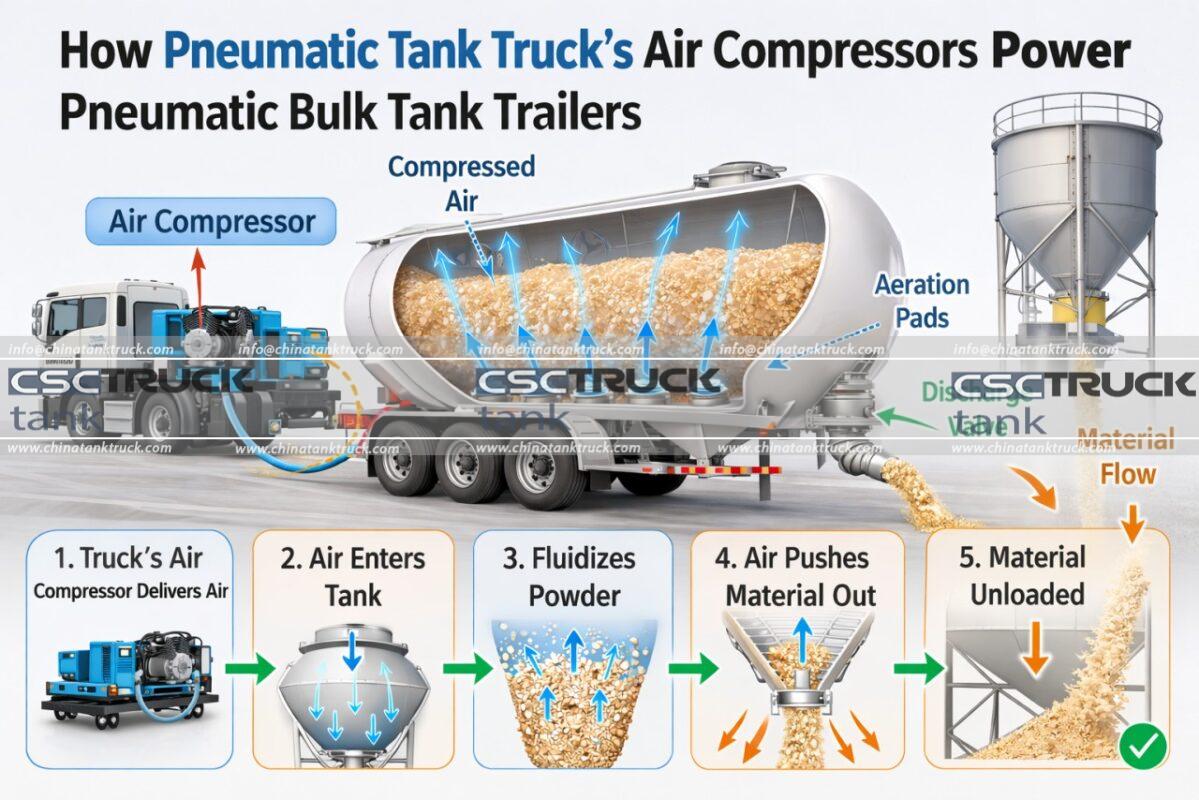
The transportation of dry bulk materials—such as cement, fly ash, flour, plastic pellets, lime, and powdered chemicals—requires specialized equipment that can move these materials safely, efficiently, and without contamination. One of the most widely used solutions in the logistics and construction industries is the pneumatic bulk tank trailer. Unlike dump trailers or mechanical conveyors, pneumatic trailers rely on compressed air generated by an air compressor to unload materials through pipelines directly into storage silos.
This air-powered system makes bulk transport faster, cleaner, and more controlled. Modern manufacturers such as CSCTRUCK China Tank Truck produce advanced pneumatic tank trucks and trailers that integrate efficient air compressors, aeration systems, and pressure control devices to optimize bulk powder transport.
This article explains how air compressors power pneumatic bulk tank trailers, including the main components, working principle, unloading process, and the advantages of this air-driven system.
Introduction to CSCTRUCK China Tank Truck Pneumatic Tank Trucks
CSCTRUCK China Tank Truck is a well-known Chinese manufacturer specializing in tank trucks, semi-trailers, and specialized transport vehicles. The company produces a wide range of bulk transport equipment, including pneumatic cement tank trucks, dry bulk trailers, and powder tanker semi-trailers designed for industries such as construction, agriculture, chemicals, and food processing.
CSCTRUCK China Tank Truck pneumatic tank trucks are designed with advanced features such as:
- High-strength aluminum or carbon steel tanks
- Efficient air compressor systems for unloading
- Aeration pads for material fluidization
- Multiple safety valves and pressure gauges
- Sealed structures to prevent contamination
These features enable operators to deliver bulk powder materials safely and unload them directly into silos without opening the tank.
Understanding Pneumatic Bulk Tank Trailers
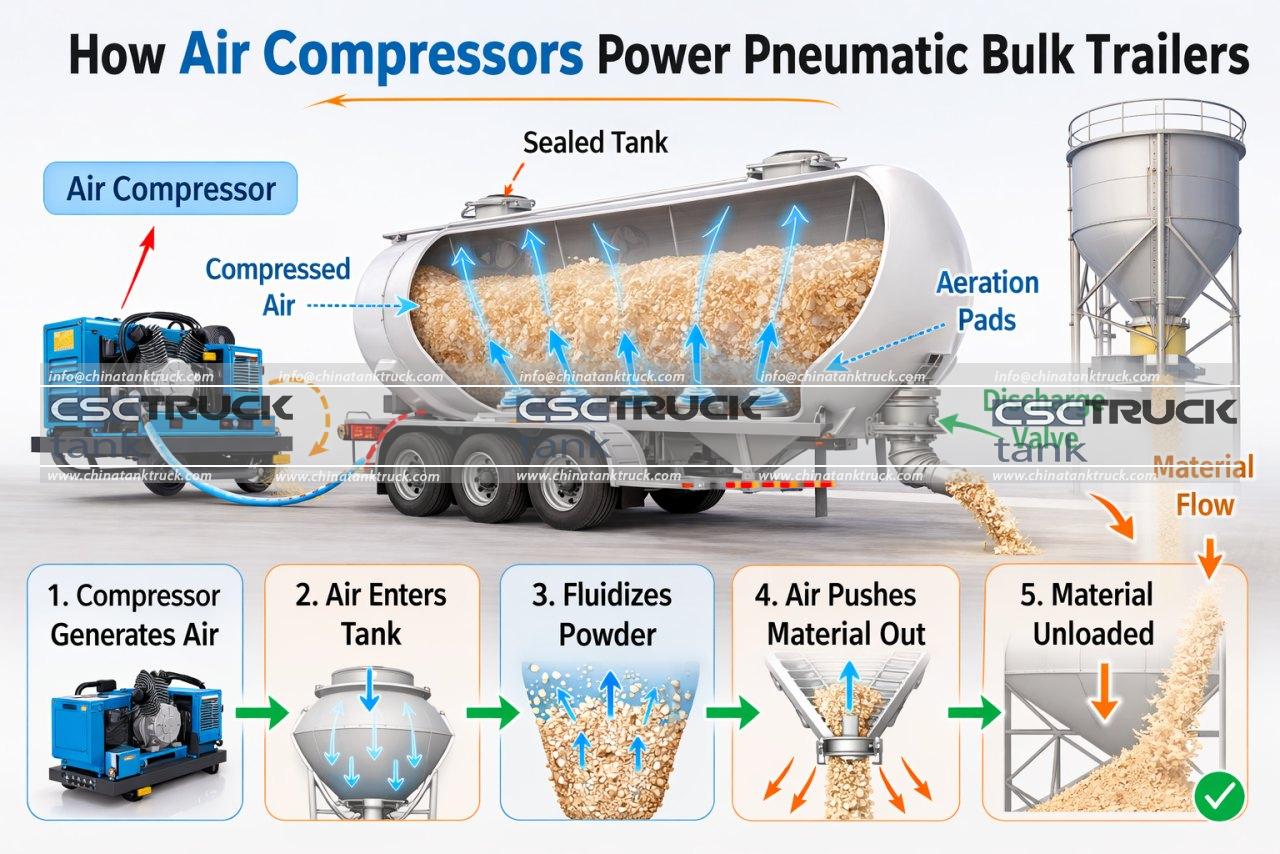
A pneumatic bulk tank trailer is a specialized tank trailer designed to transport dry powder or granular materials. Instead of relying on gravity alone, these trailers use compressed air to push the material out of the tank through discharge pipes.
The tank itself is usually cylindrical with cone-shaped hoppers at the bottom that guide materials toward the discharge outlets.
Typical materials transported include:
- Cement and fly ash
- Lime and mineral powders
- Flour, sugar, and starch
- Plastic resin pellets
- Chemical powders
The key component that powers the entire unloading process is the air compressor, which generates the compressed air required to move the bulk material.
Key Components of a Pneumatic Tank Trailer System
To understand how air compressors power the trailer, it is important to examine the main components of the pneumatic unloading system.
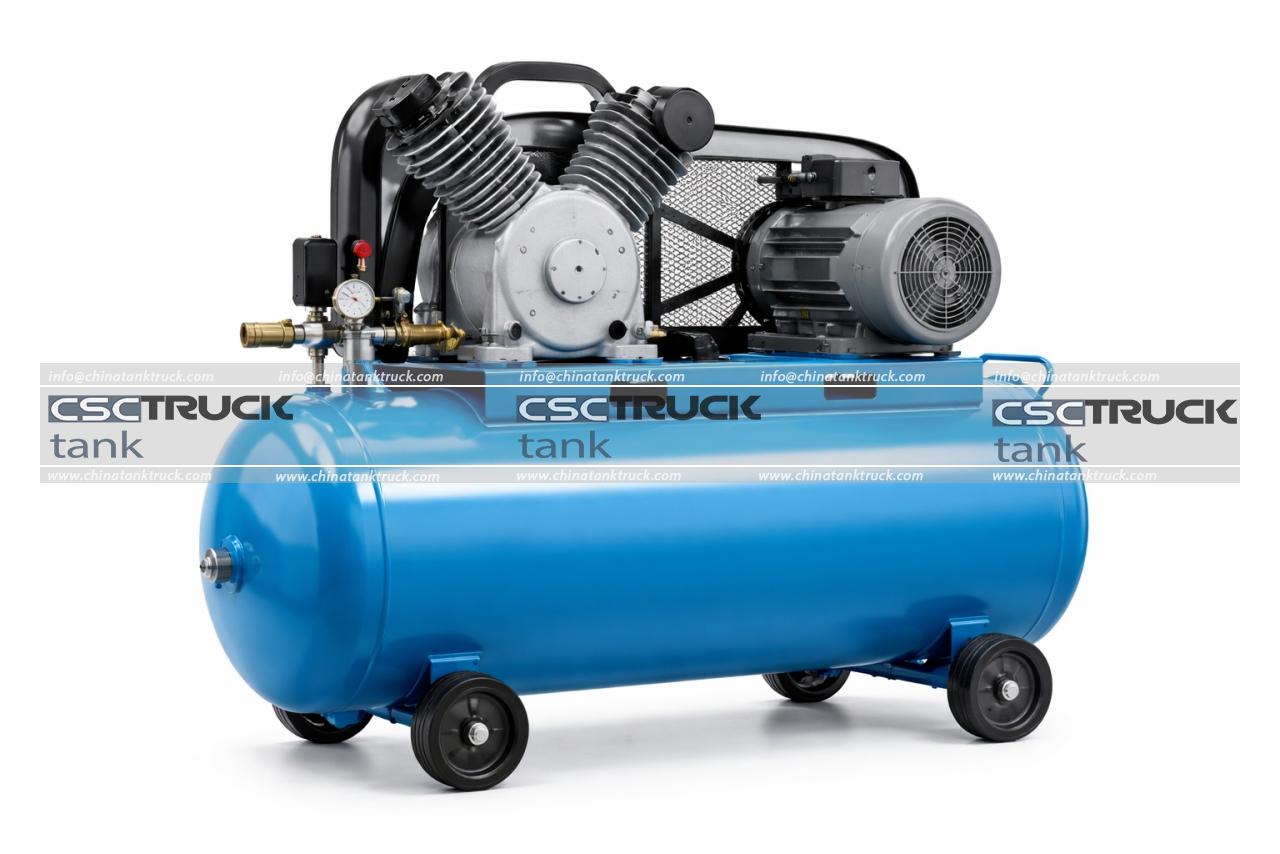
1. Air Compressor or Blower
The air compressor is the heart of the pneumatic system. It generates high-pressure airflow that pressurizes the tank and moves the bulk material through the discharge pipeline.
The compressor may be:
- Truck-mounted and powered by the engine PTO (Power Take-Off)
- Trailer-mounted
- External stationary compressor at unloading sites
Without the compressor, the dry bulk material would remain compacted in the tank.
2. Pressurized Tank Body
The tank body is a sealed pressure vessel designed to safely withstand internal air pressure during unloading.
Common tank materials include:
- Aluminum alloy (lightweight and corrosion-resistant)
- Carbon steel (strong and durable)
- Stainless steel (for food-grade products)
Sealing the tank allows compressed air to build pressure inside the chamber.
3. Aeration Pads or Fluidizing System
At the bottom of each hopper section are aeration pads or diffusers. These devices introduce compressed air into the powder, making it behave like a fluid.
This process is called fluidization, and it reduces friction between particles so the material flows easily through pipes.
4. Discharge Pipes and Valves
The fluidized material exits the tank through a system of pipes, valves, and hoses connected to a silo or receiving container.
Operators can control:
- Flow rate
- Pressure level
- Discharge direction
5. Pressure Gauges and Safety Valves
Because the tank operates under pressure, safety equipment is essential. Pneumatic trailers include:
- Pressure gauges to monitor tank pressure
- Relief valves to prevent over-pressurization
- Air filters to ensure a clean air supply
These devices protect both the equipment and the operator.

How Air Compressors Power the Unloading Process
The pneumatic unloading process works in several stages. The air compressor plays a critical role in each stage.
Step 1: Loading the Bulk Material
Before transport, the trailer is positioned beneath a loading silo. Dry bulk materials are loaded into the tank through top manholes using gravity or pneumatic conveyors.
After loading:
- The manholes are sealed
- The tank becomes airtight
- The material is stored in multiple compartments
Step 2: Activating the Air Compressor
When the trailer arrives at the destination, the driver activates the air compressor.
The compressor:
- Generates compressed air
- Sends air into the sealed tank
- Increases internal tank pressure
This pressurized environment is essential for pushing the bulk material out of the tank.
Step 3: Fluidizing the Material
Compressed air is also directed into the aeration pads located at the bottom of each hopper.
These aeration pads inject air into the powder, causing the particles to separate and move freely. The solid powder begins to behave like a liquid.
This fluidization process is essential because dry powders tend to compact during transport.
Step 4: Creating Pressure Differential
Once the tank is pressurized, a pressure difference forms between the tank interior and the discharge pipeline.
This pressure difference forces the fluidized material toward the outlet.
Gravity also assists the process because the hopper design funnels material toward the discharge valve.
Step 5: Discharging the Material
The operator opens the discharge valve and connects a hose to a silo intake pipe.
The compressed air pushes the fluidized material through the pipeline and into the storage silo.
Depending on the system design:
- Unloading may take 15–45 minutes
- Flow rates can reach 1–2 tons per minute.
Once the tank is empty, the operator releases the pressure using the relief valves.
Advantages of Air Compressor–Powered Pneumatic Trailers
Using air compressors for unloading provides several advantages compared with traditional bulk transport systems.
1. No Need for Tipping
Unlike dump trailers, pneumatic trailers do not need to tilt. This improves safety, especially in areas with limited space.
2. Faster Unloading
Compressed air allows continuous material flow, reducing unloading time significantly.
3. Clean and Contamination-Free Transport
Because the tank remains sealed throughout transport and unloading, the system prevents:
- Dust pollution
- Moisture contamination
- Product loss
4. Suitable for Multiple Industries
Pneumatic bulk tank trailers are used in:
- Construction (cement and fly ash)
- Agriculture (grain powders and fertilizers)
- Food processing (flour and sugar)
- Chemical manufacturing (powder chemicals)
Maintenance of Air Compressor Systems
Since the air compressor is the most critical component of the system, regular maintenance is necessary.
Important maintenance tasks include:
- Checking air filters
- Inspecting belts and seals
- Replacing compressor oil
- Testing pressure relief valves
- Monitoring air moisture levels
Proper maintenance ensures reliable operation and prevents contamination of transported materials.
Conclusion
Air compressors are the driving force behind pneumatic bulk tank trailers. By generating compressed air, the compressor pressurizes the tank, fluidizes dry bulk materials, and pushes them through pipelines for efficient unloading. This system enables safe, clean, and rapid transfer of powders and granular materials without the need for mechanical conveyors or trailer tipping.
Manufacturers such as CSCTRUCK China Tank Truck continue to develop advanced pneumatic tank trucks equipped with high-efficiency compressors, improved aeration systems, and enhanced safety features. As industries increasingly rely on bulk powder logistics, air-powered pneumatic trailers remain one of the most effective solutions for modern bulk transportation.
